
Verified PRO supplier badge SGS On-site Assessed Custom Manufacturer
[email protected]
  • English
  • Deutsch
  • Español
  • Français
  • Italiano
  • Português
  • Русский
  • 日本語
  • 한국어
  • العربية
  • Türk
  • Nederlands
0%

The global yoga mat market is expanding, while buyers are examining materials more carefully. Allied Market Research valued the market at approximately $13.1 billion in 2021. Its forecast reaches nearly $19.6 billion by 2031. These figures include many materials, not only cork. Still, they show strong demand for considered yoga equipment.

Grand View Research reports continued growth in wellness products and sustainable consumer goods. However, market estimates differ by methodology and product scope. That matters. A supplier may advertise “eco-friendly” without explaining harvesting, adhesives, backing, or factory conditions. This guide examines seven Cork Yoga Mat suppliers worldwide through practical criteria. These include cork sourcing, surface grip, cushioning, durability, certifications, production transparency, and international fulfillment.

Cork-industry specialist João Rui Ferreira has stated, “Cork is a natural, renewable and recyclable raw material.” The statement reflects cork’s potential, not an automatic guarantee of sustainability. Manufacturing still requires scrutiny. A thin cork layer over synthetic foam may perform well, but it is not fully natural. Some mats also smell strongly after opening. That detail deserves attention.

The selected suppliers represent different strengths. Some focus on Portuguese cork. Others emphasize travel-friendly designs, latex-free construction, or professional studio use. Product claims should be checked against technical sheets and independent certifications. No supplier is perfect. Prices, shipping emissions, and regional availability can change quickly. Readers should compare current specifications before purchasing. This balanced approach helps practitioners choose a Cork Yoga Mat that feels stable beneath the hands and remains credible beyond its packaging.
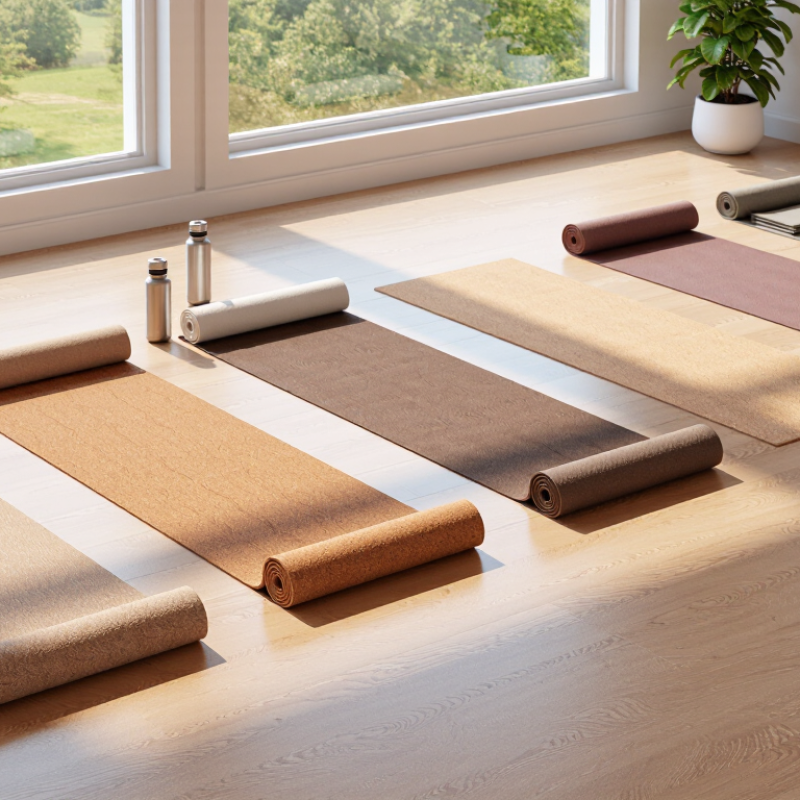
7 Best Cork Yoga Mat Suppliers Worldwide

What Makes a Cork Yoga Mat Supplier Worth Choosing

A worthwhile cork yoga mat supplier understands that natural material varies. Ask where the cork comes from, how it is harvested, and how the surface is bonded. Responsible harvesting should protect the cork oak without damaging the tree. The supplier should explain the backing material, thickness, density, and grip performance clearly. Vague answers are warning signs.

Request a physical sample before placing a large order. Test it on a wooden floor, warm skin, and a slightly damp surface. A reliable mat should stay flat, resist curling, and provide steady traction during downward dog. Check for strong odors, peeling edges, uneven printing, and loose particles. Small defects matter. They often reveal weak quality control.

Professional suppliers provide test reports for durability, material safety, and chemical limits. They should also share production capacity, lead times, packaging details, and replacement policies. Certifications can support trust, but paperwork alone proves little. Verify the issuing organization when possible. Communication matters too. Replies should be specific, consistent, and easy to document. I would be cautious if a supplier promises perfect grip in every climate. Cork changes with humidity. That limitation deserves an honest explanation. Ask whether custom sizes, recycled packaging, and sample revisions are available. A supplier worth choosing accepts practical questions, admits material limitations, and improves after feedback. Reliability shows in details.

How Cork Yoga Mats Are Made and Evaluated

Cork yoga mats begin with bark, not felled trees. APCOR technical data states that cork oak bark is typically harvested every nine years. Skilled workers strip the outer layer with curved axes, leaving the tree alive. The bark is then seasoned, boiled, dried, and sorted. Manufacturers grind it into granules before bonding it to a natural-rubber or synthetic backing. Heat and pressure create the final sheet. The surface may receive a light coating for grip and moisture resistance. Small variations are normal.

Evaluation should begin with measurable details. Check thickness, mass, dimensional stability, and surface friction after damp testing. ASTM D1894 provides a useful friction-testing framework, although it was not designed specifically for yoga mats. That limitation matters. A mat can feel grippy in a showroom yet slide on sweat or polished flooring. Look for published test conditions, not vague claims. The European Chemicals Agency also emphasizes controlled chemical exposure in consumer products, so request material safety data and emissions testing where available. Independent reports from textile and flooring laboratories can strengthen supplier credibility.

I would also inspect edge sealing, backing adhesion, and odor after several days. Cork granules can shed if bonding is weak. Repeated rolling exposes that flaw. Sustainability claims deserve scrutiny too. A supplier should identify cork origin, binder composition, and harvest intervals. One overlooked issue is repairability; many mats are difficult to recycle because cork and backing materials are permanently laminated. That deserves more honest reporting.

Profiles of Seven Leading Global Cork Yoga Mat Suppliers

7 Best Cork Yoga Mat Suppliers Worldwide

The global cork yoga mat market is expanding with demand for renewable, tactile fitness products. The Global Wellness Institute reported a 2022 wellness economy value of $5.6 trillion. This growth supports broader interest in responsible exercise equipment. The following seven supplier profiles represent useful sourcing categories, not automatic quality guarantees.

A Portuguese cork specialist often offers dense natural cork and strong production traceability. An Indian supplier may combine cork surfaces with natural rubber backing and flexible hand-finishing. A Chinese factory can provide competitive volumes, private labeling, and several thickness options. A Central European distributor may focus on certified materials and shorter regional delivery. A North American wholesaler often serves studios with bulk cartons and replacement programs. An Australian supplier may prioritize low-odor materials and climate-conscious packaging. A small artisan workshop usually provides distinctive textures, but its capacity can vary. These differences matter more than attractive product photos.

Tips: Ask for backing composition, cork thickness, slip testing, and batch consistency. Request recent laboratory reports, not only marketing claims. The Global Recycled Standard and OEKO-TEX standards can support material checks, although certification scope must be verified. Test a sample on a warm, slightly damp floor. Cork can feel grippy, but moisture and body oils change performance. Packaging also deserves inspection; compressed rolls may develop curling. No supplier is perfect. I would compare three samples before placing a large order, because texture preferences remain surprisingly personal.

7 Best Cork Yoga Mat Suppliers Worldwide - Profiles of Seven Leading Global Cork Yoga Mat Suppliers

Profile Primary Supply Region Typical Product Focus Common Mat Construction Typical Thickness Surface Characteristics Customization Options Sustainability Considerations Buyer Verification Points
Supplier Profile 01 Portugal and Western Europe Premium studio and retail yoga mats Cork surface bonded to natural rubber 4–6 mm Warm, lightly textured cork; grip generally improves with moisture Private labels, dimensions, colors, packaging and printed logos Cork is a renewable bark material harvested without cutting down the tree Confirm rubber composition, latex status, factory audits and test reports
Supplier Profile 02 East Asia High-volume e-commerce and promotional programs Cork or cork-patterned top layer with TPE or rubber backing 3–6 mm Light-to-medium texture; performance depends on backing material Low-volume sampling, barcode labels, gift boxes and color matching Ask whether the top layer is genuine cork rather than printed synthetic film Verify minimum order quantity, material declarations, odor testing and carton standards
Supplier Profile 03 South Asia Eco-focused lifestyle and wellness collections Cork composite bonded to natural rubber or plant-based elastomer 4–5 mm Natural appearance with moderate cushioning and non-slip backing Custom artwork, hangtags, woven straps and sustainable packaging Recycled or recyclable packaging may be available by request Request evidence for recycled content, biodegradability and packaging claims
Supplier Profile 04 North America Direct-to-consumer and specialty fitness channels Cork-rubber or cork-TPE multi-layer construction 4–8 mm Designed for traction, comfort and regular home practice Retail-ready labeling, fulfillment support and custom dimensions Regional warehousing can reduce shipping distance for local buyers Check country of origin, inventory location, warranty terms and return policy
Supplier Profile 05 Central and Northern Europe Professional studios and environmentally positioned retailers Cork top with natural rubber base and reinforced edge construction 4–6 mm Dense texture, stable base and relatively firm support Studio-size formats, logo embossing and coordinated accessories May offer packaging designed to reduce plastic use Confirm compliance with applicable European chemical and product-safety rules
Supplier Profile 06 Oceania and Southeast Asia Travel, outdoor and humid-climate yoga products Lightweight cork composite with flexible non-slip backing 2–5 mm Portable design; cork surface may become grippier when slightly damp Carry straps, travel sizes, rolled packaging and outdoor colorways Lightweight products may lower transport volume compared with thicker mats Test resistance to humidity, heat, odor, curling and prolonged storage
Supplier Profile 07 Global contract manufacturing network Large-scale private-label and multi-market programs Selectable cork, rubber, TPE and recycled-material combinations 3–8 mm Performance can be specified by target grip, cushioning and weight Full OEM development, tooling, packaging, testing and export documentation Material selection and packaging design can be tailored to reduce environmental impact Evaluate production capacity, quality-control plans, lead times and audit history

Note: Product specifications, certifications, minimum order quantities and sustainability claims vary by supplier and should be confirmed through current samples and documentation before purchasing.

Comparing Supplier Quality, Pricing, Customization, and Shipping

7 Best Cork Yoga Mat Suppliers Worldwide

Comparing seven cork yoga mat suppliers requires more than reading catalog claims. I request a physical sample from each supplier. The surface should feel warm, slightly textured, and stable under sweaty palms. Cork layers should bond evenly with the rubber or foam base. I also check curling, edge cuts, odor, and recovery after rolling. One sample looked beautiful but developed a weak corner after repeated folding.

Pricing depends on thickness, backing material, order volume, and packaging. A low quote may exclude custom printing, inspection, export cartons, or inland delivery. I compare the full landed cost instead of the unit price alone. Suppliers with transparent quotations are easier to trust. Still, the cheapest option is not always poor, and the highest price is not automatic proof of quality.

Customization can include dimensions, colors, logos, surface patterns, labels, and recyclable packaging. Ask for a digital proof and a pre-production sample. Small design changes may affect grip or cleaning performance. Shipping deserves equal attention. I request production time, carton measurements, shipping terms, tracking procedures, and replacement policies for damaged goods. Air freight offers speed, while sea freight usually reduces cost but needs more planning. My comparison remains imperfect because seasonal freight rates and material costs change. That uncertainty should be written into the purchasing plan.

How to Select the Right Cork Yoga Mat Supplier for Your Needs

7 Best Cork Yoga Mat Suppliers Worldwide

How to Select the Right Cork Yoga Mat Supplier for Your Needs

Choosing a cork yoga mat supplier requires more than comparing catalog prices. The 2022 Yoga in America Study reported 34.4 million U.S. yoga participants in 2021. Demand is real, but product quality varies widely. Ask suppliers for cork origin, backing material, thickness, weight, and production capacity. A stable supplier should provide clear technical sheets and consistent samples. Cork harvested from Portugal deserves careful attention, since APCOR reports that Portugal supplies more than half of the world’s cork. Still, origin alone does not prove quality.

Request independent testing for grip, abrasion, odor, and harmful substances. Check whether the factory follows ISO 9001 procedures and can support REACH-related documentation for European sales. Review the sample after repeated cleaning, not only on the first day. Natural cork may change slightly with moisture and use. That is normal, but large surface cracks are not. A low price can still be expensive. It may indicate thin cork, weak backing, or unstable adhesive.

Tips: Compare at least three samples under the same conditions. Measure slip after light sweating. Ask for batch records, defect limits, packaging details, and replacement terms. Check whether the supplier can maintain the same texture across larger orders. I would not treat cork as automatically sustainable; request recycled-content data, harvesting evidence, and realistic transport information. Supplier communication also matters. Slow, vague replies often become costly after production starts.

7 Best Cork Yoga Mat Suppliers Worldwide — How to Select the Right Cork Yoga Mat Supplier for Your Needs

Use the following weighted criteria to compare cork yoga mat suppliers. The percentages represent a practical purchasing framework rather than company-specific performance data.

How to use this chart: Give each supplier a score from 1 to 5 for every criterion, multiply the score by the suggested weight, and compare the total result. Prioritize verified material quality, transparent sustainability documentation, suitable minimum order quantities, and reliable delivery capabilities.

FAQS

What makes a cork yoga mat supplier worth choosing?

A strong supplier explains cork sourcing, harvesting, backing, thickness, density, and grip performance clearly. Vague answers worry me.

Why should buyers request a physical sample?

A sample reveals quality better than product photos. Test it on wood, warm skin, and a slightly damp floor.

What defects should buyers inspect?

Check for curling, strong odors, peeling edges, uneven printing, and loose particles. Small defects often expose weak quality control.

How can buyers evaluate grip performance?

Try downward dog on a warm, slightly damp surface. Grip may change with moisture and body oils.

What documents should a supplier provide?

Request recent reports covering durability, material safety, chemical limits, and batch consistency. Certificates help, but paperwork alone proves little.

What production details should buyers confirm?

Ask about capacity, lead times, packaging, replacement policies, and custom sizes. Specific replies are easier to document and compare.

How does packaging affect cork yoga mats?

Compressed rolls may develop curling during storage or shipping. Inspect the packaging design and ask how flatness is protected.

Can cork provide identical grip in every climate?

No. Humidity can change cork’s feel and traction. Claims of perfect grip everywhere deserve careful questioning.

How should buyers compare different suppliers?

Compare at least three physical samples before ordering in bulk. Texture preferences are personal, and I may underestimate that factor.

What signs suggest a supplier may be reliable?

Reliable suppliers answer practical questions, admit material limits, and improve after feedback. Details matter more than attractive photos.

Conclusion

Choosing the right Cork Yoga Mat supplier requires more than comparing product prices. This article explains the key factors that make a supplier worth considering, including material quality, sustainable sourcing, production standards, product durability, and reliable customer service. It also introduces how cork yoga mats are made, from selecting cork and supporting materials to pressing, bonding, finishing, and quality evaluation. Important performance criteria include grip, cushioning, odor, moisture resistance, surface texture, and long-term stability.

The article profiles seven leading global suppliers without focusing on brand names, offering a practical comparison of quality, pricing, customization options, minimum order quantities, production capacity, and shipping support. It also outlines how buyers can select the best supplier based on their target market, budget, design requirements, order volume, delivery expectations, and sustainability goals. By using these guidelines, retailers, studios, wholesalers, and private-label businesses can make a more informed decision and build a dependable supply chain for high-quality cork yoga products.

Evelyn

Evelyn

Evelyn is a skilled marketing professional dedicated to helping businesses better understand innovative products, evolving market trends, and practical solutions for sustainable growth. With extensive knowledge of the company’s product portfolio, she combines strategic insight with clear, engaging......