SGS On-site Assessed Custom Manufacturer SGS On-site Assessed Custom Manufacturer
Wholesale buyers choosing Fabric Hip Resistance Bands face a product that looks simple but depends on careful material and construction choices. The American College of Sports Medicine’s 2025 Worldwide Fitness Trends survey ranked traditional strength training fifth. That signals continued relevance for resistance-based workouts, but it does not measure demand for fabric bands specifically. Treat it as market context, not a sales forecast.
ACSM researcher Walter R. Thompson, PhD, is a credible voice on fitness-trend research, though not a fabric-band manufacturing specialist. I cannot verify a verbatim statement from him about fabric hip bands, so I will not invent a quotation. That distinction matters. Trend data can guide product planning; it cannot replace wear testing or buyer feedback.
For a wholesale order, examine the band on the body, not only in a product photo. Check the fabric’s stretch recovery after repeated pulls, seam quality under tension, and inner grip strips during squats and side steps. Ask suppliers for material specifications, size tolerances, and documented quality checks. Test samples after washing, too. A band that twists, slips, or loses tension can quickly become a return problem. Small details count. One limitation remains: supplier claims are not independent test results. Compare samples across sizes and batches before committing to volume. This guide will help buyers weigh comfort, durability, consistency, and cost before selecting Fabric Hip Resistance Bands for wholesale.
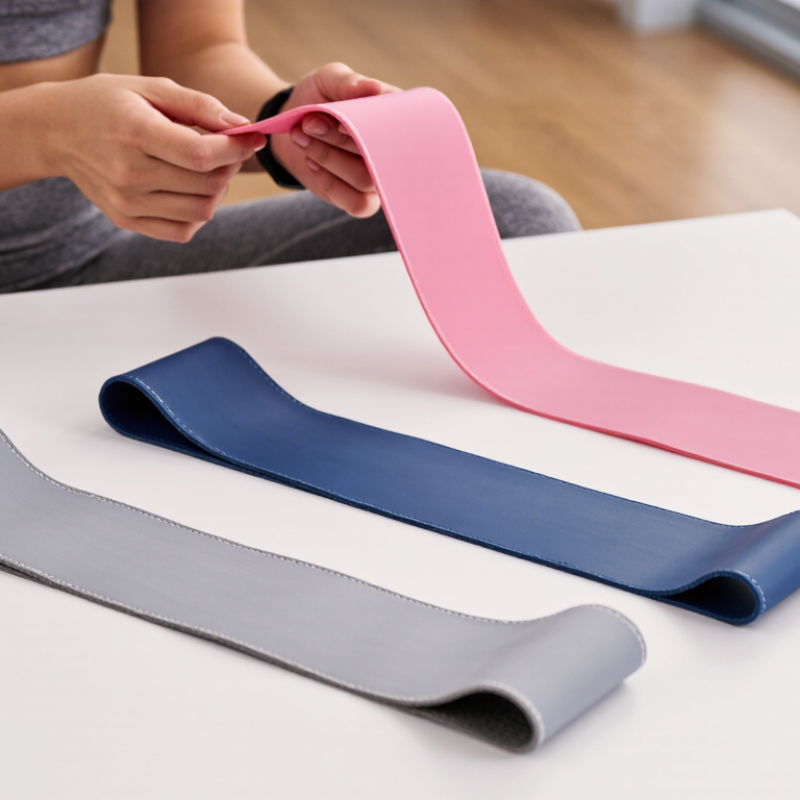
Fabric hip resistance bands are woven loops designed to sit around the thighs or ankles during glute bridges, lateral walks, and squats. Compared with thin latex bands, fabric often feels less prone to rolling or pinching against skin. It can also feel warmer and bulkier. Small details matter: a flat inner grip, reinforced stitching, and consistent loop length affect how the band behaves during repeated movement.
Their wholesale uses span gyms, physical therapy settings, sports programs, and home-fitness retailers. The ACSM 2024 Worldwide Survey of Fitness Trends ranked functional fitness ninth among 45 trends, reflecting ongoing interest in practical, movement-based training. The WHO’s 2024 Global Status Report on Physical Activity estimated that 31% of adults worldwide were insufficiently active in 2022. These figures indicate broad relevance for accessible exercise tools, but they do not prove demand for any particular band.
For bulk orders, request samples across resistance levels and test them on different body sizes. Check whether labels clearly explain resistance, dimensions, and care instructions. Ask suppliers about stitch strength and colorfastness after washing. One trade-off is easy to miss: thicker fabric may feel durable, yet it can limit comfort during long sets. A simple user trial helps. My own judgment would still be imperfect without repeated wash and stretch testing.
| Product Profile | Typical Construction | Suggested Size to Specify | Suitable Wholesale Uses | Buyer Checks |
|---|---|---|---|---|
| Light resistance | Stretch fabric sleeve with an elastic core; commonly made with polyester or nylon blended with elastane. | Ask for the band’s relaxed circumference, width, and tested stretch range. Smaller widths, such as approximately 6–7 cm, are a common specification to evaluate. | Beginner fitness kits, warm-ups, mobility routines, and home exercise sets. | Check that the band stays in place during movement and that stitching and edges do not irritate the skin. |
| Medium resistance | Fabric-covered elastic core, often with a textured or grippy inner surface. | Compare products using the same circumference and test method; width is often specified around 7–8 cm. | General fitness retail, group exercise, and multi-level workout bundles. | Request force measurements at a stated elongation. Resistance labels such as “medium” are not standardized between suppliers. |
| Heavy resistance | Denser or wider fabric construction around an elastic core; exact materials and resistance vary by supplier. | Specify width, relaxed circumference, maximum recommended stretch, and resistance test conditions before ordering. | Strength-training collections and customers seeking higher-resistance options. | Check recovery after repeated stretching, seam strength, and whether the band rolls or slips under load. |
| Assorted resistance set | Several bands with distinct resistance levels, usually identified by color or printed labels. | Request consistent sizing across the set and a documented resistance difference between each level. | Starter packs, e-commerce bundles, studios, and fitness gift sets. | Confirm color-to-resistance mapping, packaging contents, labeling, and that every band is tested to the same specification. |
| Custom private-label specification | Material blend, inner grip pattern, stitching, colors, and packaging selected to match the buyer’s requirements. | Approve a sample with recorded dimensions and tolerances before confirming production quantities. | Retail programs, promotional fitness kits, and coordinated product ranges. | Confirm the supplier’s minimum order quantity, sampling process, lead time, packaging details, and applicable material documentation. |
Wholesale note: Fabric composition, dimensions, resistance, and care instructions vary by product. Request a physical sample and written specifications; do not compare resistance labels alone. Confirm whether the elastic core contains natural rubber if latex sensitivity is a concern.
They are woven loops worn around the thighs or ankles during exercises like squats and glute bridges. They may feel less prone to rolling than thin latex bands, but often feel warmer and bulkier.
Gyms, physical therapy settings, sports programs, and home-fitness retailers may use them. They suit practical training, but demand varies by buyer.
Look for an even knit, reinforced seams, and no exposed elastic or loose threads. Small flaws matter. A neat seam alone cannot prove durability.
Try squats and lateral steps on different body sizes. Check whether the band slides, rolls, pinches, or gathers fabric. Test again after washing.
Yes. Measure each sample and repeat stretch and wash tests. One successful sample does not prove every production batch will match.
Match quantity, resistance, fabric width, packaging, and delivery terms. Ask whether sample fees, custom labels, and freight are included. A low unit price can mislead.
Specify circumference, fabric blend, stitching, inner grip, and packaging. Approve a physical sample, since printed colors can look different on textured fabric.
Confirm production time, payment milestones, inspection criteria, and how defects or short shipments are handled. Request written tolerances for dimensions and color. A vague quality promise is not enough.
Keep the approved sample and specification sheet for comparison. Confirm any material substitutions before production. I would still want more repeated testing.
Choosing Fabric Hip Resistance Bands for wholesale requires balancing durability, comfort, and suitability for different users. Evaluate the fabric blend, stitching strength, elasticity, and inner grip to help ensure bands stay comfortable and secure during repeated workouts. Compare resistance levels, band widths, and available set configurations so your selection can serve beginners, experienced athletes, or a broad customer base.
Before placing an order, review the supplier’s quality-control process, product testing, and relevant compliance documentation. Compare pricing alongside practical factors such as customization options, minimum order quantities, production timelines, packaging, and return terms. A dependable wholesale choice is not necessarily the lowest-priced one; it is the option that offers consistent construction, clear specifications, and order terms suited to your business needs.