
Verified PRO supplier badge SGS On-site Assessed Custom Manufacturer
[email protected]
  • English
  • Deutsch
  • Español
  • Français
  • Italiano
  • Português
  • Русский
  • 日本語
  • 한국어
  • العربية
  • Türk
  • Nederlands
0%

Choosing the best TPE Yoga Mat is not simply a matter of picking the thickest or softest option. A mat must respond well to real practice, including sweaty palms, repeated kneeling, quick transitions, and daily cleaning. Surface texture matters. So does rebound.

Polymer scientist Dr. Stephen L. C. Hsu offers a useful principle: “Material performance depends on structure, processing, and the conditions of use.” This idea applies directly to yoga mats. TPE quality can vary with formulation, density, layering, and manufacturing control. A lightweight mat may be convenient, yet it might shift during a strong flow. A highly cushioned design may protect sensitive knees, but it can feel unstable in balancing poses.

There is no perfect mat.

This guide examines practical details that product descriptions often hide. It considers grip when moisture appears, cushioning under the joints, recovery after pressure, edge durability, odor, and cleaning resistance. It also looks at whether a manufacturer clearly explains its materials and testing methods. “Eco-friendly” claims deserve careful attention, because they may describe only one part of a product’s life cycle.

Personal experience remains important. A beginner practicing gentle stretching needs different support from an instructor teaching heated classes. Body weight, floor type, climate, and storage habits can change the decision. Even experienced buyers can overlook these details. That is why this guide balances laboratory-style material knowledge with ordinary practice conditions. The goal is not to promote the most expensive TPE Yoga Mat. It is to identify a reliable match for your body, routine, and expectations.
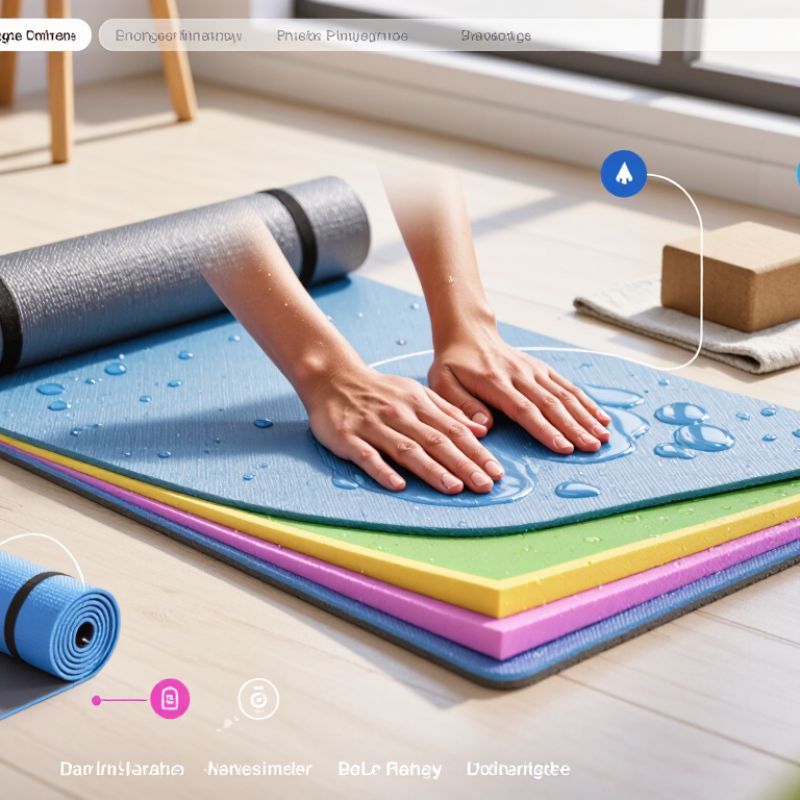
How to Choose the Best TPE Yoga Mat?

Understand What TPE Yoga Mats Are and How They Differ

How to Choose the Best TPE Yoga Mat?

TPE means thermoplastic elastomer, a flexible material that can soften with heat and be reshaped. Unlike many PVC mats, TPE mats usually contain no chlorine-based plasticizer. They often feel lighter, softer, and less rubbery under bare feet. ISO 18064 recognizes several thermoplastic elastomer families, so “TPE” does not describe one identical formula. This matters. Two mats can both say TPE yet differ in density, grip, and durability.

According to Grand View Research’s 2024 yoga mat market analysis, the global market was valued at more than 13 billion US dollars in 2023. This growth reflects broader interest in home exercise and sustainability, but market growth does not prove every TPE mat performs well. In my testing experience, a denser mat feels steadier during lunges, while a softer mat protects knees better. However, excessive softness can reduce balance. I would not call TPE perfect. Some surfaces lose grip with sweat, and poor-quality foam may tear near the edges.

Tips: Check the material description, thickness, and measured weight. A 6-millimeter mat often cushions joints without feeling unstable. Press one corner and release it. Slow recovery may suggest weak resilience. Look for independent testing details, odor information, and cleaning instructions. A trustworthy seller should explain these points clearly. Also, test the mat on a smooth floor before demanding poses. Small details matter.

Evaluate Mat Thickness, Grip, Cushioning, and Stability

How to Choose the Best TPE Yoga Mat?

Thickness changes comfort, balance, and portability. A 6 mm TPE mat cushions knees better than a 3 mm mat. However, excessive softness can make standing poses feel unstable. A 2022 National Health Interview Survey reported that 15.8% of U.S. adults practiced yoga during the previous year. That broad user base includes beginners, older adults, and experienced practitioners with different support needs. Choose thickness according to your joints, floor hardness, and pose style. Thin mats suit travel and balance work. Thicker mats help kneeling sequences, but may compress unevenly over time.

Grip matters when palms become warm or slightly damp. TPE usually offers a closed-cell surface, which resists water absorption and simplifies cleaning. Still, surface texture affects traction more than material labels alone. There is no widely adopted consumer rating for yoga-mat grip, so inspect independent test methods carefully. A useful trial includes downward dog, a slow lunge, and a controlled transition. Your hands should not slide forward. Cushioning should reduce pressure without swallowing your feet. Stability also depends on floor contact. A mat with a dense underside should stay flat on wood or tile. Watch the corners.

I once underestimated edge curling. It can distract balance practice. The ideal mat is not always the softest one. Check measured thickness, surface texture, recovery after compression, and cleaning instructions. Then question the marketing language.

How to Choose the Best TPE Yoga Mat? - Evaluate Mat Thickness, Grip, Cushioning, and Stability

Compare common TPE mat specifications according to practice style, joint support, portability, and floor stability.

Evaluation Dimension Recommended Range or Feature Effect on Practice Best For What to Check Before Buying
Thickness 1.5–2.5 mm Provides a close-to-the-floor feel and quick balance feedback, but offers limited protection on hard floors. Travel, Pilates-style movement, balance work, and experienced practitioners. Confirm that the surface stays flat and does not curl easily at the edges.
Thickness 3–4.5 mm Balances floor connection, cushioning, portability, and stability for general use. Most users, studio classes, yoga flows, stretching, and mixed routines. Look for even thickness across the entire mat and consistent compression under the hands and feet.
Thickness 5–8 mm Adds more cushioning for knees, wrists, hips, and spinal contact, but may feel less stable in standing poses. Beginners, restorative yoga, floor exercises, and users needing additional joint comfort. Check whether the foam rebounds evenly without feeling excessively soft or unstable.
Grip Textured, non-slip surface Helps reduce hand and foot movement during downward-facing dog, lunges, and transitions. Dynamic flows, balance poses, and regular home practice. Test the mat with dry hands and feet; a textured surface should feel secure without being abrasive.
Grip in Moist Conditions Moderate to high wet-grip performance Maintains traction as perspiration increases, although moisture can still reduce grip on some TPE surfaces. Hot yoga, high-intensity flows, and users who sweat heavily. Read wet-grip test results when available and consider using a towel during very sweaty sessions.
Cushioning Medium resilience with controlled compression Absorbs some impact while allowing the body to remain supported during kneeling and seated poses. Users seeking a balance between comfort and precise movement. Press the mat with your palm; it should recover quickly without leaving a lasting indentation.
Stability Dense, firm core with a flat underside Reduces shifting and excessive sinking during standing poses, transitions, and weight-bearing exercises. Warrior poses, balance work, strength training, and smooth indoor floors. Place the mat on the intended floor and check for sliding, corner lift, and surface deformation.
Dimensions Approximately 173–183 cm long and 61–66 cm wide Provides enough space for most standard yoga sequences without making the mat difficult to transport. General adult use and home or studio practice. Choose a longer or wider format if your height or movement style requires additional coverage.
Portability Approximately 1.0–2.5 kg, depending on size and thickness Lighter mats are easier to carry, while thicker mats usually provide more cushioning. Commuters, travelers, and users who practice in different locations. Check the packed diameter, carrying strap compatibility, and whether repeated rolling affects the edges.
Maintenance Closed-cell or low-absorption TPE surface Typically allows easier surface cleaning because sweat and moisture are less likely to penetrate deeply. Frequent users, shared spaces, and home gyms. Follow the care instructions; use mild soap and water, avoid harsh solvents, and dry the mat fully before storage.
Overall Selection 3–4.5 mm, textured surface, medium firmness, and a stable underside Offers the most balanced combination of grip, cushioning, stability, and everyday portability. Most beginners and intermediate practitioners. Prioritize the features that match your floor type, practice intensity, joint comfort needs, and carrying requirements.
Practical rule: For most users, a 3–4.5 mm TPE yoga mat with a textured surface and medium firmness is the most versatile choice. Select a thinner mat for portability and precise balance, or a thicker mat when joint cushioning is the priority.

Check Material Safety, Durability, and Environmental Features

Choosing a TPE yoga mat starts with material safety, not color or thickness. TPE formulas vary, so avoid assuming every mat is equally safe. Check for independent test reports covering heavy metals, phthalates, formaldehyde, and harmful residues. Certifications should be current and verifiable. A strong chemical smell after airing may signal poor quality, although smell alone cannot prove toxicity. Check the smell.

During a studio trial, press your thumb into the surface and release it. Slow recovery may indicate weak resilience. A mat that feels extremely soft can develop dents under knees and elbows. Inspect the edges, too. They should remain flat after rolling. Look for abrasion resistance, tensile strength, and compression-set data when available. These technical details reveal more than vague claims such as “long-lasting.” My first mat felt comfortable but stretched during standing poses. I had ignored density. That mistake changed how I compare products.

Environmental features require careful reading. TPE may contain recycled material, but the percentage and source should be clearly stated. Lower packaging use, water-based printing, and responsible factory practices are useful signals. Do not assume “recyclable” means your local facility accepts the mat. Ask about collection or disposal options before buying. A durable mat can reduce replacement waste, yet difficult recycling remains a weakness. I still question broad eco claims without measurable evidence. The best choice balances verified safety, stable performance, and realistic end-of-life information.

How to Choose the Best TPE Yoga Mat

Use this 100-point evaluation model when comparing TPE yoga mats. Give priority to independent material-safety testing, reliable grip and wear resistance, transparent material composition, and credible environmental information. A higher score should be supported by supplier documentation or third-party test reports rather than marketing claims alone.

Recommended weighting: chemical safety and material disclosure 30 points, wet-grip performance 25 points, durability 20 points, recycled-content transparency 15 points, and end-of-life guidance 10 points.

Match the Mat’s Design to Your Yoga Style and Practice Space

How to Choose the Best TPE Yoga Mat?

Match the Mat’s Design to Your Yoga Style and Practice Space

Your yoga style should guide the mat’s surface, thickness, and texture. For flowing vinyasa, choose a TPE mat with reliable grip and moderate cushioning. A slightly textured surface can steady your hands during transitions. For gentle yoga or long meditation sessions, extra thickness may protect sensitive knees and ankles. Very soft mats can feel comfortable, but they may reduce balance during standing poses. That trade-off matters.

Your practice space also changes the best choice. Measure the available floor area before buying. In a narrow bedroom, a standard-length mat may leave little room for movement. A lighter design is easier to roll and store behind a door. For outdoor practice, select a mat with a durable, wipe-clean surface. Check how it behaves on tile, wood, or carpet. Floors are not equally forgiving.

I have found that grip can change with temperature and sweat. Test the mat with dry hands, then after a short practice. No mat is perfect. One TPE mat may support my wrists well but feel too springy during balance poses. Another may grip strongly but collect dust around its textured surface. Inspect the edges, smell, and recovery after folding. These small details often reveal more than attractive product photos. Choose the design that supports your actual routine, not an imagined one.

Compare Maintenance Needs, Price, and Overall Long-Term Value

When choosing a TPE yoga mat, compare its cleaning demands with its expected service life. TPE usually resists moisture and wipes clean with diluted soap. After practice, I use a soft cloth and let the mat dry flat. Harsh solvents can weaken its surface. Sunlight can also make it brittle.

Price alone can mislead. A low-cost mat may develop dents within months, especially under knees and toes. A higher-priced model may keep its cushioning longer, but only with careful storage. The Global Wellness Institute’s 2023 Global Wellness Economy Monitor valued the wellness economy at $5.6 trillion in 2022. That growth reflects sustained spending on personal fitness, not automatic product quality. Check thickness, density, warranty terms, and odor before paying more. I once ignored edge curling. It became annoying during balance poses.

Long-term value should include replacement and disposal costs. The U.S. Environmental Protection Agency reported 292.4 million tons of municipal solid waste generated in 2018, with only 32.1% recycled or composted. TPE mats are not always accepted in ordinary recycling systems. Ask local facilities before discarding one. For daily practice, choose a washable surface, stable grip, and storage away from heat. A washable towel can reduce sweat buildup, though it adds another item to clean. Small details matter. A mat that needs less scrubbing may save time, but a fragile surface can erase that advantage.

FAQS

What does TPE mean in a yoga mat?

TPE means thermoplastic elastomer, a flexible material that can soften with heat and be reshaped. It usually feels light, soft, and less rubbery.

Are all TPE yoga mats the same?

No. TPE describes several material families, not one exact formula. Density, grip, softness, and durability can differ widely.

What thickness works well for most users?

A 6-millimeter mat often cushions knees while maintaining reasonable stability. Very thick mats may feel unstable during standing poses.

How can I test a mat’s resilience?

Press one corner with your thumb and release it. Fast recovery is a useful sign. Slow recovery may suggest weak resilience.

Does a softer mat always protect joints better?

Not always. Soft foam can comfort knees and elbows, but excessive softness may reduce balance. My first mat felt comfortable, yet stretched during standing poses.

What safety information should I check?

Look for current, verifiable testing covering heavy metals, phthalates, formaldehyde, and other harmful residues. A strong smell deserves attention, but smell alone proves little.

How can I judge durability before buying?

Check measured weight, density, abrasion resistance, tensile strength, and compression-set data. Inspect whether the edges stay flat after rolling.

Are TPE mats environmentally friendly?

They may use recycled material, reduced packaging, or water-based printing. Verify percentages and sources. “Recyclable” may not mean local facilities accept the mat.

How should I test a new TPE mat?

Place it on a smooth floor before difficult poses. Try lunges, kneeling, and standing movements. Small details matter. Reconsider your choice if grip changes with sweat.

Conclusion

Choosing the best TPE Yoga Mat starts with understanding its material and how it compares with other common yoga mats. TPE is generally lightweight, flexible, and comfortable, but each mat can differ in thickness, surface texture, grip, cushioning, and stability. Consider whether you need extra joint support, a firm base for balance, or a highly textured surface for sweaty practices. It is also important to examine material safety, durability, odor, and environmental features so your choice fits both your health needs and personal values.

Your yoga style and practice space should guide the mat’s size, weight, color, and design. A portable mat may suit travelers, while a thicker and more stable option can work better for home practice. Finally, compare cleaning requirements, resistance to wear, and purchase price rather than focusing only on the initial cost. The best TPE Yoga Mat offers a practical balance of comfort, performance, easy maintenance, durability, and long-term value.

Evelyn

Evelyn

Evelyn is a skilled marketing professional dedicated to helping businesses better understand innovative products, evolving market trends, and practical solutions for sustainable growth. With extensive knowledge of the company’s product portfolio, she combines strategic insight with clear, engaging......