Choosing a Resistance Band Tube Set in 2026 is not just a matter of picking bright colors or the highest advertised resistance. Buyers need to match the set to its intended use: home strength training, mobility work, travel, or supervised rehabilitation. Small details matter. A secure foam handle, reinforced stitching on a door anchor, and tubes that stretch smoothly can affect whether a set gets used regularly. Resistance labels deserve a closer look, too. Manufacturers may measure tension differently or list combined resistance rather than the load of one tube. This guide compares common tube set types and explains what their components offer, where they fit, and what to inspect before ordering.
We will cover basic single-tube kits, interchangeable-tube sets, and fuller packages with ankle straps, handles, and anchors. Each format has trade-offs. Compact kits pack easily, while larger sets offer more exercise options but need more storage and compatibility checks. For purchasing teams, consistent quality, clear specifications, replacement-part availability, and credible product documentation can matter as much as the advertised resistance range. Product photos are not enough. Ask how tubes are tested, whether connectors are metal or plastic, and what the warranty actually covers. These checks cannot remove every uncertainty, and a label may still leave questions unanswered. That is worth admitting. No single set suits every buyer. The goal is to compare useful features with fewer assumptions and choose equipment suited to its users.
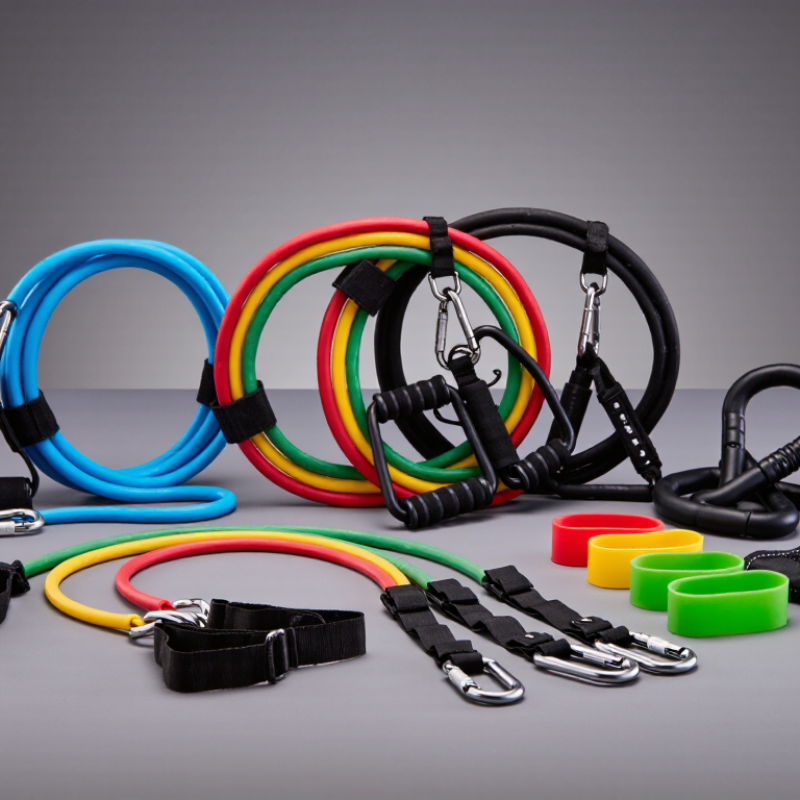
A resistance band tube set is a modular strength-training kit, not simply a bundle of elastic cords. Most sets combine tubes with handles, clips, and interchangeable resistance levels. Some add a door anchor or ankle straps for rows, presses, and leg work. The useful question is whether the parts fit securely and support the movements you actually plan to do.
Strength training remains relevant to buyers. The American College of Sports Medicine’s 2025 Worldwide Survey of Fitness Trends ranked traditional strength training fifth. That survey tracks professional fitness trends, not tube-set sales. Still, it signals continued interest in accessible strength equipment. A tube set can serve home workouts, travel, or warm-ups, but its resistance labels are not always directly comparable.
In 2026, evaluate the full system: tube material, connector quality, handle comfort, and clearly explained resistance ratings. Check whether the stated load refers to one tube or several combined, and whether the rating includes stretching. Small details matter. A loose clip can interrupt a set, while a stiff handle may rub during repeated pulls. Latex sensitivity also deserves attention; confirm the material before purchase. One point remains easy to miss: resistance changes with stretch length, so printed numbers cannot replace careful, controlled testing.
Handled tube sets are familiar for rows, chest presses, and curls, with foam grips that reduce hand pressure. Look for secure end clips and a door anchor with padded edges. Simple, but useful. Stackable sets connect several tubes to one handle, letting users adjust tension in small steps. This flexibility suits shared home gyms, though extra connectors can clutter a drawer or loosen if poorly made. Check resistance figures carefully; they may describe each tube or the combined load.
Loop-tube sets form a closed circle and suit lateral walks, shoulder exercises, and compact travel routines. They are quick to pack. Figure-eight tubes use a center grip and two loops for presses and seated pulls, but offer fewer setup options. Light-resistance tubes often have slimmer grips and can help beginners practice controlled movement. Yet “light” varies between sellers, so compare stated resistance and tube length instead of relying on labels. No set fits everyone. Match the type to available space, grip comfort, and the movements likely to be repeated each week.
This chart compares the number of tubes in representative configurations: a single tube, a handled tube, a figure-eight tube, a three-tube kit, and a five-tube interchangeable kit. Set contents vary by product; these counts are examples, not market averages or a ranking.
A useful resistance-band tube set is more than several colored tubes in a pouch. Its core parts usually include latex or synthetic tubes, foam handles, a door anchor, ankle straps, and clips. Check the stitching around straps and the clip gates for secure closure. Handles should feel stable, not slick, during rows or presses. A door anchor needs dense padding and a loop that stays put when the tube pulls. Small details matter.
Resistance labels often show a range, but the feel depends on how far the tube stretches. Some sets let you clip several tubes to one handle, giving buyers more adjustment options. The stated resistance may not match every user’s experience; body position and movement length change the load. Color coding helps, though it can mislead if the legend is unclear. I would not assume the heaviest tube is automatically the most useful. Smooth, controlled movement matters more than chasing a number.
Tips: Inspect tubes for cuts, sticky patches, or thinning before each session. Keep the anchor on the hinge side of a closed door when possible, and test it gently before pulling hard. Store tubes away from direct sunlight. It is easy to overlook this, but heat and age can weaken the material.
A useful comparison starts with the training you actually plan to do. For rehabilitation-style movements or light shoulder work, a set with gentle resistance steps may be easier to control. For rows, squats, and stronger users, check whether the heaviest tube provides enough tension without forcing awkward form. More pieces do not always mean better value.
Check how resistance changes across the set. Some kits use several tubes that attach to one handle, letting you adjust tension in small steps. Others offer separate tubes, which can be quicker to swap but less flexible. Resistance labels vary between sellers, so treat colors and stated weights as guides, not exact measurements. Not perfectly standardized.
Handles should feel secure during repeated pulls, and clips should close smoothly. If you train at home, look for a door anchor with a broad, padded contact area. Place it on the hinge side of a closed door, then test it gently before applying full force. For travel, a compact set is convenient, though thin handles may feel uncomfortable during longer sessions. I would also consider storage: loose tubes can tangle, and that small annoyance is easy to underestimate.
| Set type | Typical configuration | Best suited to | Advantages | Points to compare before buying |
|---|---|---|---|---|
| Single-tube set | One or more tubes, often with simple handles; resistance depends on tube thickness, length, and stretch. | Beginners, travel workouts, and people seeking a compact option for basic movements. | Lightweight, straightforward to use, and easy to store. | Check the stated resistance level, tube length, handle comfort, and whether the resistance suits your exercises. Resistance figures are not standardized across sellers. |
| Stackable multi-tube set | Several tubes connect to handles, usually with clips, so users can combine tubes for more resistance. | Users who want adjustable resistance for upper- and lower-body strength training. | Offers multiple resistance combinations in one kit and can adapt as training needs change. | Confirm which tubes may be used together, how resistance is calculated, and whether clips and handles feel secure under tension. |
| Tube set with door anchor | One or more tubes plus a padded anchor designed to hold the tube at a door. | Home workouts that include rows, presses, pull-downs, and other exercises from different angles. | Creates additional exercise angles without requiring a permanent wall-mounted fixture. | Check anchor padding and stitching, use it only as directed on a suitable closed door, and inspect the tube and anchor before each session. |
| Figure-eight tube set | A tube formed into a figure-eight shape, commonly with two grip points or foam-covered sections. | Light resistance exercises, mobility routines, and simple upper-body movements. | Compact design with a simple grip arrangement and no separate clips to connect. | Check the grip spacing and tube length for your range of motion; the fixed shape may limit exercise options compared with longer tubes. |
| Tube set with foot straps or pedals | Tubes paired with foot loops, a pedal bar, or both; some sets also include handles. | Seated or standing exercises, including light resistance work for arms, shoulders, and legs. | Provides several grip or foot positions and can be useful where space is limited. | Compare foot-loop size, pedal stability, tube attachment points, and whether the set is intended for your exercise positions. |
| Latex-free tube set | A tube set made from a non-latex material, such as TPE; construction and accessories vary by set. | Buyers who need to avoid natural rubber latex or prefer an alternative material. | Offers an alternative to natural-latex tubing, with resistance options depending on the design. | Verify the material declaration and any relevant allergy information; “latex-free” does not by itself indicate a specific resistance level or durability. |
| Buyer note: Tube resistance changes as the tube stretches, and advertised resistance values may be measured differently by different sellers. Compare sets using their stated testing method, usable resistance combinations, tube length, attachment quality, and intended exercises—not resistance numbers alone. | ||||
A tube set should match the buyer’s training plan, not just advertise a large number of resistance levels. Check the resistance range, tube length, handle grip, door anchor, and whether replacement parts are available. Small details matter. A slick handle can turn a controlled row into a grip test. Ask suppliers how resistance was measured, since force rises as a tube stretches and labels may not compare consistently across sets.
Evidence can guide selection. The World Health Organization’s 2020 physical activity guidelines recommend muscle-strengthening activity on at least two days each week for adults, making repeat-use comfort and dependable accessories practical buying criteria. A systematic review published in the Journal of Sports Science & Medicine reported that elastic resistance training can produce strength gains comparable to conventional resistance training in the studied protocols. That does not mean every tube set performs equally. Buyers should request test details, inspect seams and connectors, and check that the stated resistance levels suit intended users. I would also leave room for judgment: resistance labels alone are imperfect, and a set that feels right in a short trial may behave differently during longer sessions.
Common parts include tubes, foam handles, clips, a door anchor, and ankle straps. Check the stitching and clip gates. Small details matter.
Look for cuts, sticky patches, or thinning. Replace damaged tubes rather than pulling on them. Store them away from direct sunlight and heat.
Not always. Labels and colors are useful guides, but they are not perfectly standardized. Stretch distance and body position also change how much tension you feel.
Some sets let you clip multiple tubes to one handle. This can provide smaller resistance adjustments. Check that each clip closes securely.
Choose one with dense, broad padding and a secure loop. Place it near the hinge side of a closed door. Test it gently before pulling hard.
Gentle resistance steps may be easier to control for light shoulder work. Comfortable handles help during repeated movements. Try the grip if possible.
Check that the strongest tube provides enough tension without forcing awkward form. A secure handle is important during repeated pulls. More pieces are not always better.
Compact sets are easy to pack, but thin handles may feel uncomfortable during longer sessions. Loose tubes can tangle. I might underestimate that annoyance again.
A Resistance Band Tube Set in 2026 is a portable training system that uses elastic tubes to provide adjustable resistance for strength, mobility, and general fitness exercises. Sets may differ in the number and strength of tubes, their connection style, and whether they include handles, ankle straps, door anchors, or storage bags. Understanding these components helps buyers assess how easily a set can be adjusted and which exercises it can support.
When comparing options, consider training goals, experience level, desired resistance range, and available space. A lighter, simpler set may suit mobility work or beginners, while a broader range of resistance can support varied workouts and gradual progression. Buyers should also look at tube construction, attachment security, handle comfort, ease of setup, and clear resistance information. Choosing a set that matches intended use and feels practical to maintain can make it easier to train consistently at home or while traveling.