 SGS On-site Assessed Custom Manufacturer SGS On-site Assessed Custom Manufacturer
Direct-from-manufacturer pricing, strict ISO/SGS process tolerance controls, and turnkey OEM private label configurations. Selected factory items are available with swift sampling, customized branding molds, and full Amazon FBA export preparation.

Understanding the mechanical tradeoffs between recycled SBR tire crumb, synthetic EPDM granulate, and virgin NBR rubber matrices is essential for preventing premature subfloor pulverization and joint failure.
In high-impact Olympic weightlifting, functional Crossfit boxes, and commercial multi-station facilities, commercial gym rubber flooring serves as the primary barrier between ballistic kinetic energy and vulnerable concrete subfloors. Sourcing managers frequently confront post-installation failures: edge curling caused by thermal unsteadiness, sulfurous off-gassing, binder hydrolytic breakdown, and indentation shear from heavy dropped bumper plates. As a specialized OEM factory with 14 years of compounding experience, our facility isolates and resolves these failure modes through rigorous polymer engineering and precision hydraulic vulcanization.
Modern gym mat manufacturing balances three core raw-material configurations: Fine-Mesh Shredded SBR (Styrene-Butadiene Rubber) derived from recycled automotive tires; EPDM (Ethylene Propylene Diene Monomer) virgin granules incorporated for vibrant UV-stable fleck pigmentation and surface wear resistance; and MDI-Based Polyurethane Prepolymer Binders that replace toxic, pungent TDI binders. While standard commodity suppliers utilize coarse 10–20 mesh crumb bound with low-viscosity binders under short curing cycles, our high-density production runs utilize precision cryogenic screening (mesh size 20–40 mesh) under 250-ton hydraulic compression presses at 160°C. This guarantees a Shore A durometer density of 65° to 75°, preventing surface crumb migration and delivering superior kinetic energy dissipation.
| Flooring Formulation | Polymer Base & Granule Size | Shore A Hardness | Tensile Strength (MPa) | Acoustic IIC / STC Delta | Recommended Gym Application |
|---|---|---|---|---|---|
| High-Density Interlocking Puzzle Tile | Recycled SBR (20-30 mesh) + 15% EPDM fleck | 68° ± 3 | ≥ 4.8 MPa | ΔIIC 21 dB / STC 54 | Free-weight areas, dumbbell aisles, selectorized machine zones |
| Seamless Vulcanized Rubber Roll | Micro-milled SBR compound + PUR crosslink | 62° ± 2 | ≥ 5.2 MPa | ΔIIC 18 dB / STC 50 | Functional training turf tracks, cardio zones, sprint strips |
| Ballistic Drop Pad & Deadlift Platform | Dual-layer dual-density: open-cell base + vulcanized skin | 55° base / 75° top | ≥ 6.5 MPa | ΔIIC 28 dB / STC 62 | Olympic weightlifting platforms, heavy powerlifting deadlift drops |
| Anti-Microbial Studio Aerobic Mat | Crosslinked closed-cell NBR/TPE cellular blend | 45° ± 2 | ≥ 2.9 MPa | ΔIIC 14 dB / STC 42 | Pilates reformer carriage underlay, stretching, bodyweight zones |
Standard mats shear along the binder line when subjected to heavy rotational barbell drops. Our high-temperature vulcanization promotes complete cross-linking of polymeric bonds, achieving tensile elongation rates above 140% without micro-fissuring or crumb disintegration.
Eliminating the noxious sulfur odor characteristic of generic tire mats is critical for boutique studios and enclosed basements. We employ secondary high-temperature aeration ovens and water-based crosslinkers, achieving full compliance with strict REACH SVHC and California Prop 65 standards.
Dimensional variations cause noticeable gaps, tripping hazards, and dust entrapment. Every batch of our interlocking rubber tiles undergoes high-speed automated water-jet or die-cutter finishing with a tolerance of ±0.3 mm, ensuring watertight, razor-sharp seam convergence.
Shifts in urban commercial real estate, multi-family fitness centers, and green building directives are reshaping technical specifications for global gym flooring tenders.
With gyms moving into ground floors and multi-tenant luxury towers, impact sound insulation (IIC ≥ 58) has become a mandatory legal requirement. Dual-layer waffle-undercarriage rubber tiles absorb low-frequency thuds (20–80 Hz) generated during 200 kg deadlift impacts without transmitting structural vibrations through reinforced concrete slabs.
Global ESG reporting and European Green Public Procurement (GPP) demand verified post-consumer rubber content exceeding 85%. Our automated compounding process integrates certified end-of-life tire granulate with bio-based elastomer binders, delivering an audited circular lifecycle calculation that satisfies commercial LEED v4.1 certification requirements.
Traditional rubber flooring carries inherent fire risks. Leading architectural tenders now mandate Euroclass Cfl-s1 or ASTM E648 Class 1 critical radiant flux flame ratings. By incorporating non-toxic aluminum trihydrate (ATH) flame retardants directly into the top wear-layer during vulcanization, we guarantee enhanced self-extinguishing smoke-suppressed safety.
The expense of messy polyurethane adhesives and destructive floor removals is driving rapid adoption of self-locking dowel and hidden interlocking puzzle systems. Facility operators can relocate, exchange damaged tiles, or reconfigure functional agility lanes in hours rather than incurring days of adhesive curing downtime.
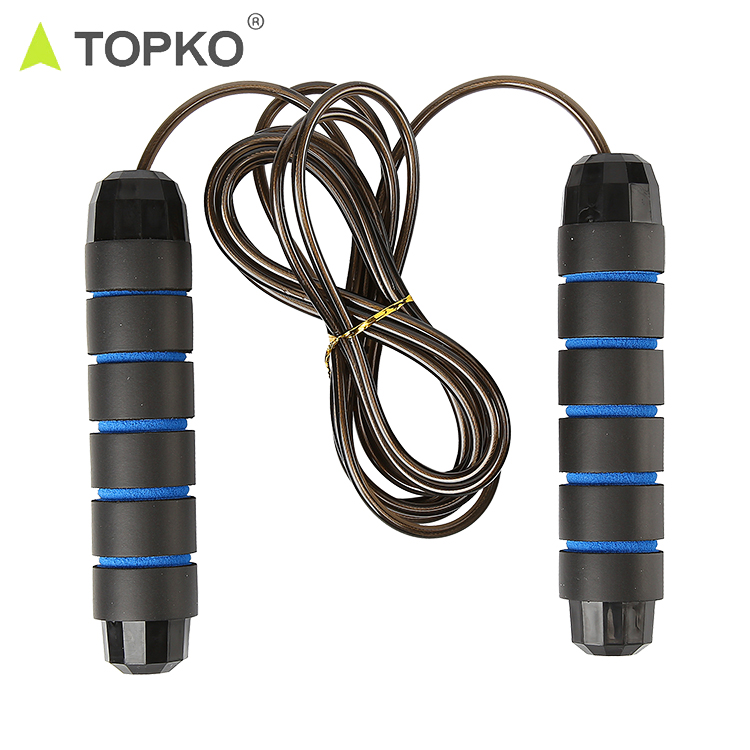
Procurement professionals must also navigate freight container volume efficiency versus product density. High-density rubber mats (1000 kg/m³ to 1200 kg/m³) are strictly weight-limited in ocean freight rather than volume-limited. A standard 20-foot container reaches its 21–24 metric ton payload limit long before total cubic capacity is filled. Working closely with our export logistics desk allows distributors to optimize pallet nesting, mix lightweight accessories (such as EVA foam rollers, latex bands, and jump ropes) with dense rubber flooring containers, and dramatically lower landing freight costs per square meter.
WLI Fitness Equipment Co., Ltd. operates as a verified Tier-1 Chinese manufacturing enterprise, validated on-site by SGS Group. We serve retail brands, fitness franchise chains, and high-volume Amazon sellers worldwide.
Recycled truck tire SBR is shredded, double-demagnetized to eliminate wire fragments, and screened to uniform mesh size.
Automated volumetric pumps blend environmental odorless MDI binders and UV-stabilized colored EPDM flecks in dynamic rotary mixers.
Multi-cavity steel molds undergo compression under 250-ton hydraulic presses at 160°C to achieve isotropic matrix density.
Mats pass through continuous forced-air curing tunnels to exhaust residual volatile organic compounds and eliminate chemical aromas.
Digital cutting tables mill micro-interlocking puzzle teeth and beveled perimeter ramps with ±0.3 mm positional repeatability.
Permanent brand logos, workout zone lines, and custom grid markers are hot-vulcanized or laser-etched directly onto wear surfaces.
Each production lot undergoes Shore A hardness testing, tensile elongation verification, and thickness gauge validation.
Mats are banded, moisture-barrier wrapped, palletized with corner protectors, and barcode-labeled for direct warehouse delivery.
Direct engineering and contractual clarity for commercial gym owners, equipment distributors, procurement directors, and e-commerce brand managers.