 SGS On-site Assessed Custom Manufacturer SGS On-site Assessed Custom Manufacturer
Engineered for high-traffic fitness centres, government defence facilities, and premier functional fitness hubs across the Australian Capital Territory.
Commercial gym floor infrastructure in Canberra and the broader Australian Capital Territory (ACT) operates under distinct architectural, climatic, and legislative frameworks. Unlike coastal metropolitan hubs where ambient moisture and moderate temperatures dominate, Canberra endures severe diurnal temperature swings—ranging from sub-zero winter overnight frost conditions (-5°C) to intense, dry inland summer extremes surpassing 38°C. These thermal gradients impose significant expansion and contraction shear stresses on polymer-bound elastomeric compounds, demanding advanced compound stabilization and precision vulcanization protocols.
As a Tier-1 rubber matting factory and direct B2B supplier, our manufacturing engineering division produces high-density styrene-butadiene rubber (SBR), premium ethylene propylene diene monomer (EPDM), and vulcanized high-tensile athletic tiles engineered specifically to meet the stringent acoustic, fire resistance, and structural absorption requirements of the National Construction Code (NCC) and Australian Building Codes Board (ABCB).
"Procuring commercial gym flooring in Canberra demands compliance beyond superficial visual aesthetics. Structural concrete preservation, acoustic decibel attenuation across multi-storey mixed-use precincts, and AS ISO 9239.1 Critical Radiant Flux compliance form the non-negotiable benchmark for commercial fitness developers, Commonwealth departments, and boutique strength training clubs."
Whether fitting out high-throughput functional training boxes in Fyshwick, boutique corporate wellness centers in the Parliamentary Triangle (Barton and Parkes), or elite collegiate strength facilities in Bruce and Acton, commercial specifiers require absolute assurance regarding tensile resilience, non-porous hygiene maintenance, and documented floor protection under repetitive ballistic impacts from Olympic lifting barbell drops.
Direct comparison of our factory formulations engineered for high-impact Olympic lifting, cardiovascular suites, and institutional fitness installations across Canberra.
| Flooring Grade | Material Formulation | Standard Thickness | Density (kg/m³) | Acoustic Rating (ΔLw) | Fire Compliance (AS ISO 9239.1) | Recommended Canberra Application |
|---|---|---|---|---|---|---|
| Elite Vulcanized HD | 100% Virgin EPDM Surface + Dual-Layer SBR | 15mm / 20mm / 25mm | 1,050 – 1,150 kg/m³ | 21 dB – 24 dB Drop | CRF ≥ 4.5 kW/m² | Commercial Strength Gyms, Civic High-Rise Podiums |
| Acoustic DropTile™ | Open-Cell Hollow Base Polyurethane SBR | 30mm / 45mm / 50mm | 950 – 1,020 kg/m³ | 26 dB – 32 dB Drop | CRF ≥ 3.0 kW/m² | Multi-Storey Residential Gyms (Kingston / Woden) |
| Rollout Seamless Pro | Cold-Cured Micro-Granule Polyurethane SBR | 6mm / 8mm / 10mm | 980 – 1,050 kg/m³ | 16 dB – 18 dB Drop | CRF ≥ 2.2 kW/m² | Functional Sled Tracks, Cardio Decks, Mitchell Studios |
| Ballistic Heavy Rig Mat | High-Density Solid Vulcanized Pure Elastomer | 20mm / 30mm Interlock | 1,200 – 1,280 kg/m³ | 23 dB – 27 dB Drop | CRF ≥ 4.8 kW/m² | Tactical Conditioning, Military & Emergency Hubs |
Tailored flooring systems designed to resolve the architectural and operational realities of the Australian Capital Territory's diverse fitness sectors.
Government departmental health hubs in Parkes, Barton, and Russell require strict acoustic isolation, extreme wear durability, and certified non-toxicity. Our zero-VOC, ultra-low odor vulcanized rubber tiles guarantee pristine indoor air quality (IAQ) within sealed government office complexes while handling rigorous daily personnel physical readiness testing.
Factory custom laser-branding allows agency crests and demarcations directly embedded into high-wear top-surfaces without risking surface delamination under constant footfall.
High-volume commercial powerlifting clubs and strength facilities located within Fyshwick and Mitchell industrial complexes face severe winter subfloor cold radiating through uninsulated concrete slabs. Our 20mm and 25mm high-density interlocking tiles feature bottom thermal-break grooving that prevents chill transfer and eliminates moisture condensation trapping underneath.
Precision CNC waterjet edges ensure tight, gap-free interlock joints that resist shifting under high-load heavy tire flips, heavy sled sprints, and unyielding Olympic deadlifts.
High-density residential towers across Canberra City, Kingston Foreshore, and Woden require gym amenities that conform to strict strata acoustic bylaws and BCA Part F5 sound isolation regulations. Dropped 120kg barbells generate low-frequency structure-borne vibration that transfers through reinforced concrete slabs into lower-floor residences.
Our 50mm Acoustic DropTile™ matrices absorb kinetic energy immediately at the impact locus, delivering certified acoustic drops of up to 32 dB (ΔLw) to prevent noise complaints and legal compliance disputes.
Forward-thinking structural and aesthetic adaptations driving commercial specification across the nation's capital.
Commercial lease agreements across Canberra commercial properties frequently mandate returning concrete slabs to base-build condition upon termination. Chemical epoxy polyurethane glues permanently damage screeds, incurring hefty end-of-lease rectification costs. ACT gym owners are aggressively migrating toward precision puzzle-lock and hidden-connector modular mats that lay flat under their own gravitational mass without toxic chemical adhesives.
In alignment with ACT Government climate targets and net-zero commitments, procurement officers prioritize verified circular economy inputs. Our facility reclaims post-consumer commercial vehicle tires, refining them through magnetic separation, ambient mechanical milling, and eco-certified polymer binding. Specifiers receive verified chain-of-custody documentation confirming 88%–94% recycled content without heavy metal leaching.
Canberra's winter conditions mean patrons constantly drag residual rainwater and frost indoors. Local gyms require flooring that balances barefoot tactile comfort for reformer Pilates with certified wet pendulum slip resistance (Class P3/P4). Our proprietary vulcanized calendering process creates an anti-slip orange-peel micro-texture that maintains coefficient of friction under moist or sweat-covered conditions.
Our SGS-assessed, 14-year manufacturing plant leverages advanced automated foaming, compression molding, and rigorous QC to supply international fitness leaders.
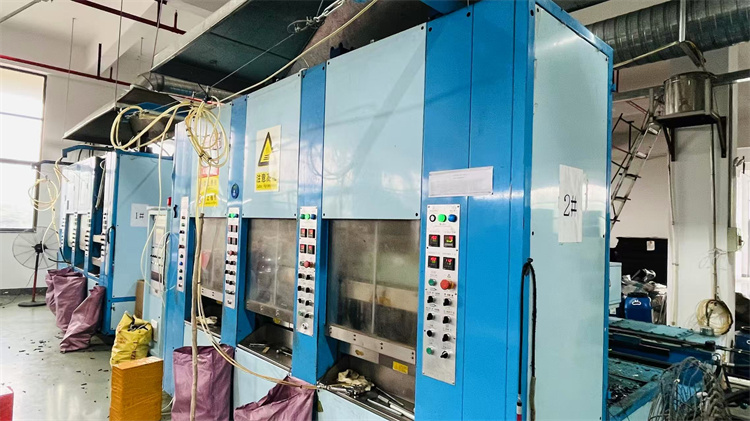
Automated thermal presses curing polymer rubber under 200 tonnes of hydraulic pressure to guarantee non-porous surface integrity.
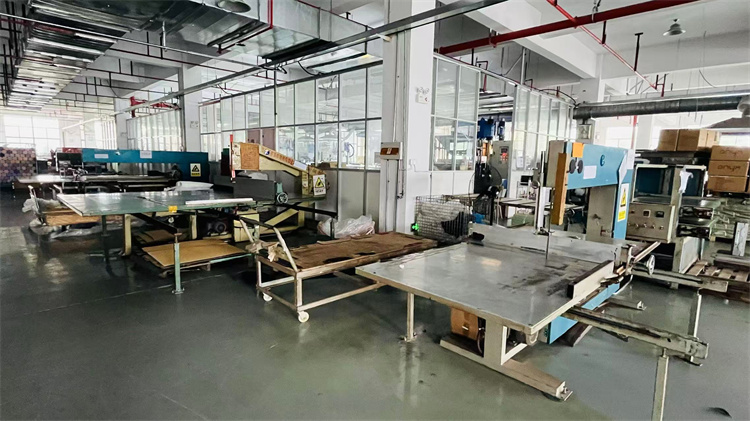
Sub-millimeter cutting tolerances ensuring seamless butt-joints and tight puzzle interlocks that eliminate trip hazards.
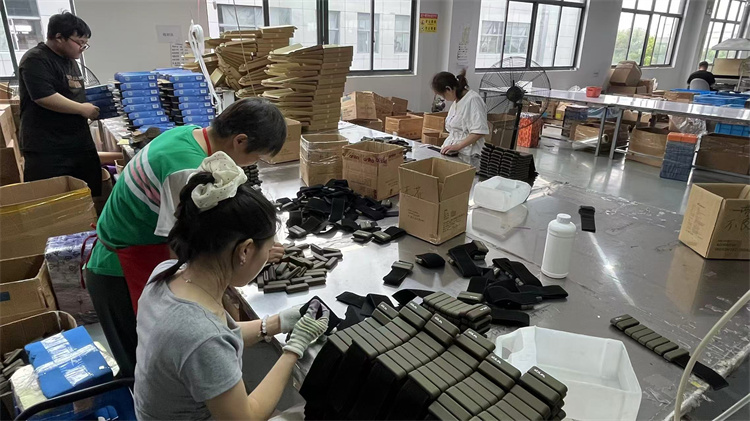
Every batch verified for Shore A hardness, tensile elongation, density consistency, and dimensional stability prior to packing.
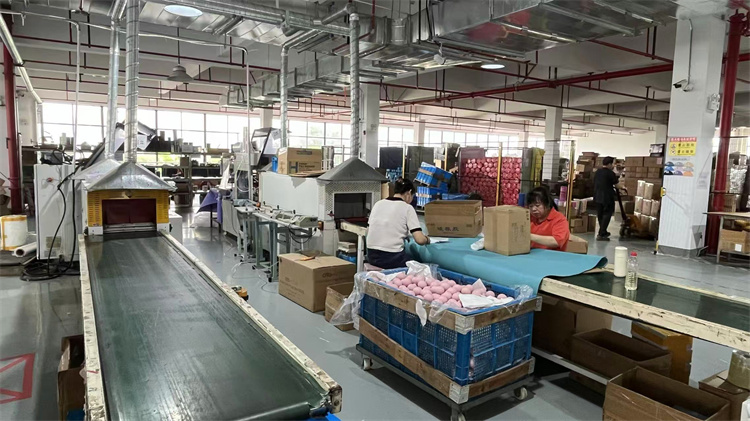
Reinforced corner-protected moisture-barrier palletizing for direct containerized logistics into Port Botany and trucking to Canberra.
Purchasing directly from an audited manufacturing facility eliminates multi-tiered importer markups, giving Canberra commercial gym owners and fit-out contractors 30% to 45% capital expenditure savings. Rather than settling for pre-packaged retail stock with variable binder ratios, our clients collaborate directly with our engineering personnel. You specify target tile thickness, EPDM color fleck distribution (10% to 50% density), polyurethane binder grade (aromatic for value or aliphatic for UV outdoor resistance), and specific edge bevel profiles.
With an audited annual export volume exceeding US$19.9M and 6 protected design and utility patents, our global operations maintain consistent raw material reserves of over 5,000 tonnes of recycled crumb rubber. This supply security guarantees color batch consistency and density matching across multi-phase facility expansions in the ACT.
Detailed technical answers covering logistics, installation, building code compliance, and maintenance for ACT projects.
Unconditioned concrete slabs in Canberra warehouse spaces (e.g., Hume, Mitchell) can drop to near-freezing temperatures in winter. Cold rubber contracts. If mats are installed straight from a delivery truck without climate acclimation, they will expand when indoor heating activates, leading to edge buckling and ridge formation. We recommend placing all tiles inside the installation space at 18°C–22°C for a minimum of 48 hours prior to final laying.
Under the National Construction Code (NCC), commercial fitness centers classified as Class 6 or Class 9b public assembly buildings must meet AS ISO 9239.1 flammability testing requirements. Flooring must achieve a minimum Critical Radiant Flux (CRF) of 2.2 kW/m² to 4.5 kW/m² depending on sprinkler coverage. Our vulcanized commercial tiles comply fully with these critical fire performance benchmarks, with third-party NATA-accredited test certificates supplied with bulk orders.
Low-grade rubber mats manufactured with crude coal tar solvents and unrefined tire oils off-gas hazardous volatile organic compounds (VOCs). We utilize a double-heat degassing chamber during post-cure vulcanization, combined with high-grade, food-contact grade MDI polyurethane binders. This reduces VOC emissions below Green Star Australia thresholds, making our flooring safe for sealed basement gyms, government basements, and boutique studios.
Ocean freight containers dispatch from our factory port direct to Port Botany (Sydney), which takes approximately 14 to 18 days on water. Customs clearance and intermodal road freight via the Hume Highway into Canberra (Fyshwick/Mitchell freight depots or direct dockside delivery) takes an additional 3 to 5 business days. Typical door-to-door transit for custom production runs averages 4 to 5 weeks from mold confirmation.
While 15mm high-density tiles protect concrete from dumbbell abrasions and moderate kettlebell impacts, they are insufficient for repetitive 150kg+ Olympic weightlifting barbell drops. Over time, point-load kinetic shock penetrates 15mm flooring, pulverizing the concrete screed below into micro-dust. For heavy free-weight deadlift zones, we strongly prescribe 30mm to 50mm dual-layer acoustic ballistic tiles or integrated dual-density subfloor drop zones.
Never use petroleum-based solvents, citrus cleaners, bleach, or high-acid chemical agents, as these degrade polyurethane elastomeric binders and soften rubber compounds. Maintenance requires daily vacuuming of chalk dust and dry debris, followed by damp mopping using a pH-neutral (pH 7–8) enzymatic floor cleaner. In commercial Canberra facilities with heavy chalk usage, automatic micro-scrubbers with soft nylon brush heads offer superior cleaning without saturating subfloor seams.
Planning a new commercial gym fit-out, university athletic facility, or multi-residential fitness development in Canberra? Receive comprehensive factory technical datasheets, acoustic compliance certificates, and factory-direct volume pricing within one business day.
Get a Quote